Mediterranean Cruises: Destinations, Regions & Planning Guide

A Mediterranean cruise moves you across a sea that has carried traders, empires, and pilgrims for thousands of years, and it does the moving while you sleep. One morning brings a walled old town, the next a whitewashed hillside, the next a harbor lined with cafes and centuries-old churches. Few destinations pack this much history, cuisine, and coastline into a single itinerary, which is exactly why it remains one of the most requested cruise regions we plan.

For itineraries that span several countries or require tight port-to-port logistics, our White Glove Service can manage the details end to end.

Your Extraordinary Mediterranean Adventure Awaits

Ancient harbors, island villages, and coastlines that change character with every port of call – the Mediterranean packs more variety into a single sailing than almost anywhere on earth. The glimpses below capture just a little of what your voyage can hold.
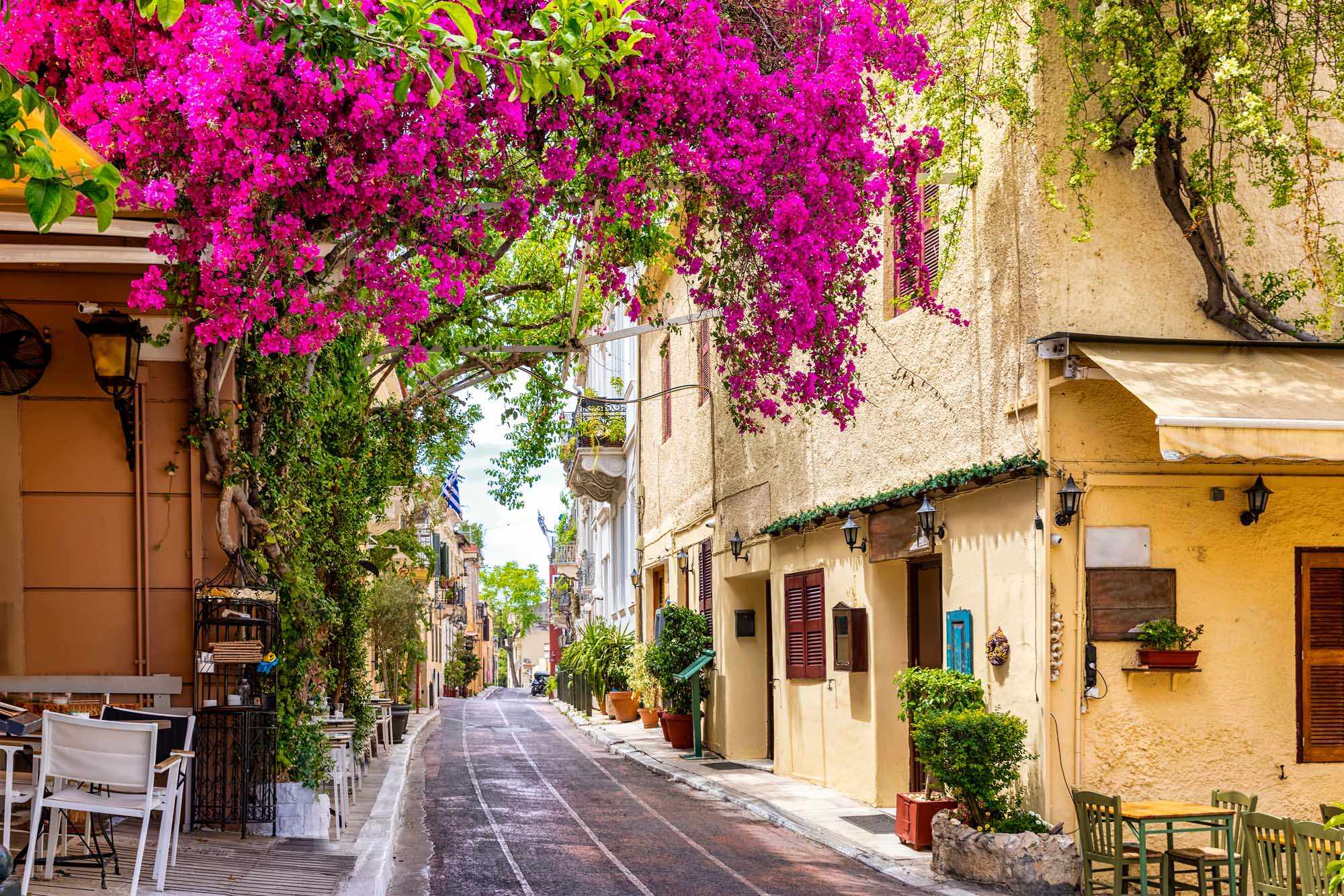
Vibrant magenta bougainvillea cascades over a charming Mediterranean street lined with historic stone buildings
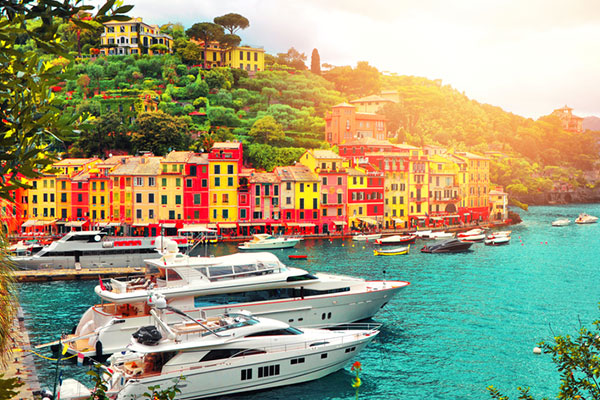
Colorful waterfront village with moored boats and turquoise sea at golden hour sunset
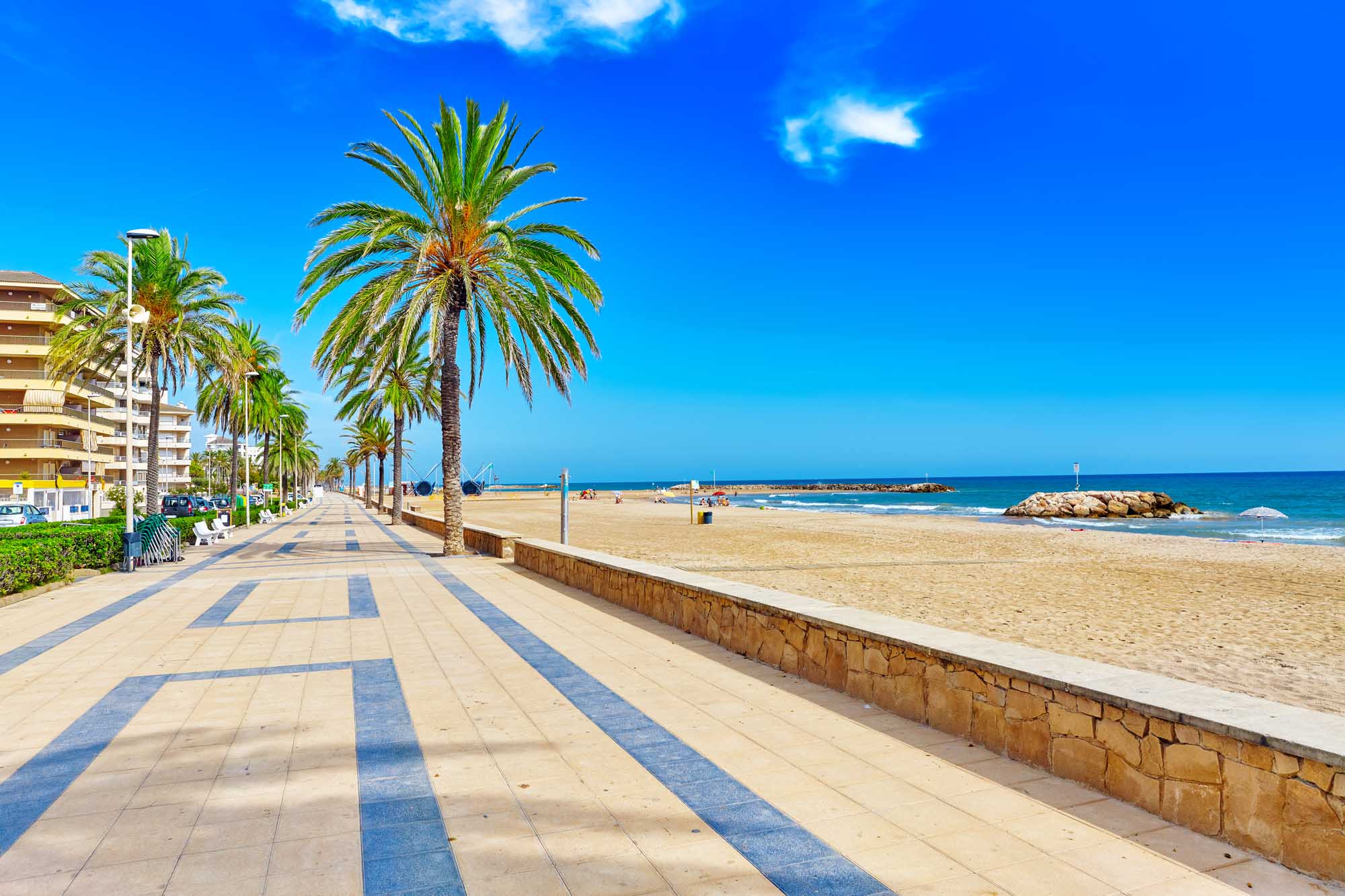
Barcelona beachfront promenade with palm trees and sandy beach along Mediterranean Sea
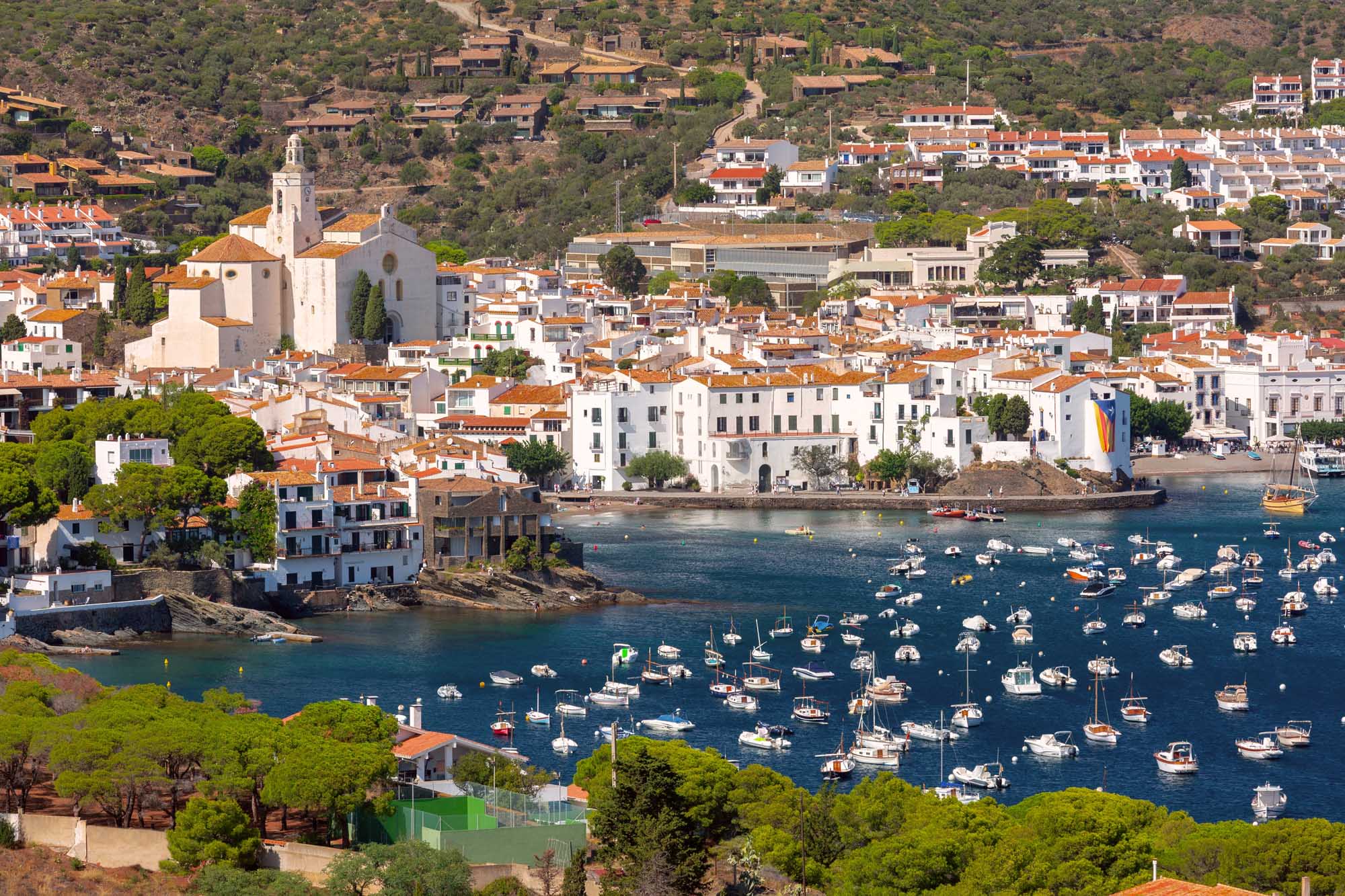
Aerial view of Cadaques harbor with white houses, terracotta roofs, and moored boats along Spain's Costa Brava coastline

World-Class Cuisine

Every port doubles as a meal worth planning around. Tapas and fresh seafood define Spain’s coast, hand-rolled pasta and wood-fired pizza carry southern Italy, and Provençal markets stock the ingredients behind bouillabaisse and ratatouille. Your appetite gets its own itinerary alongside the ship’s.

Stunning Coastlines

The coastline changes character by the day. Limestone cliffs drop straight into turquoise water in some stretches, while others open onto long sand beaches or narrow inlets lined with pastel villages. Few sailing routes anywhere shift scenery this dramatically from one port to the next.

Ancient History & Culture

Civilizations have been layering history here for thousands of years, and a single day ashore can move you from a Roman amphitheater to a Byzantine church to a Renaissance piazza. Few cruising regions let you walk through that many centuries before lunch.

Popular Mediterranean Cruise Itineraries

Mediterranean sailings generally follow three route patterns, and the right one depends on how much time you have and which century you’d rather explore first. Your cruise travel advisor can help match the itinerary to your priorities and connect it to a broader trip if you want to see more of the region.
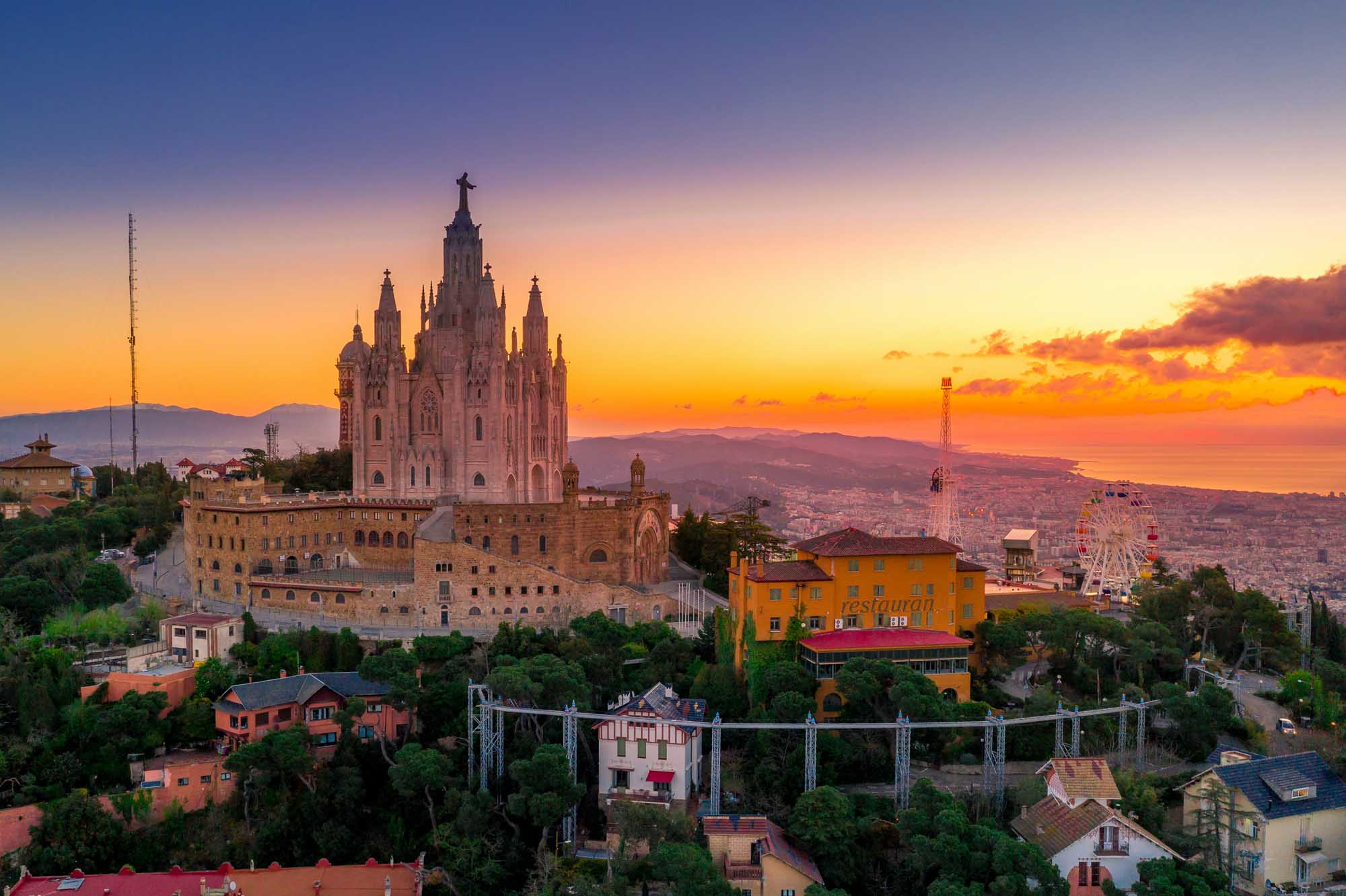
Aerial view of Cadaques harbor with white houses, terracotta roofs, and moored boats along Spain's Costa Brava coastline

Western Mediterranean

Embarkation: Barcelona or Rome (Civitavecchia), most often roundtrip. Key Ports: Barcelona, Rome, Naples, Marseille, Monaco. Duration: 7 to 12 nights. This is the most heavily sailed Mediterranean route and the natural starting point for first-time cruisers, pairing major art cities with Roman ruins and Riviera beaches.

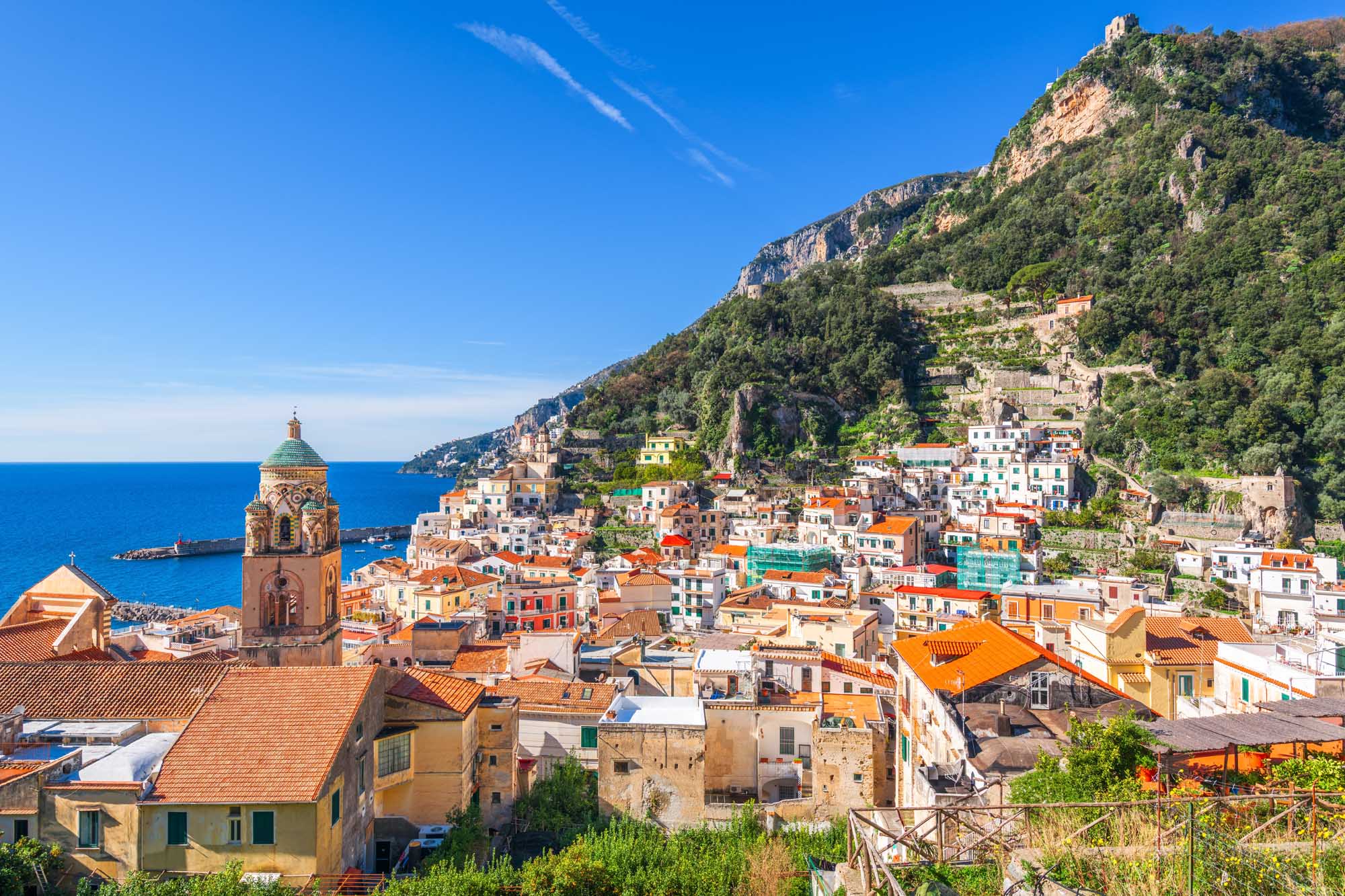
A stunning panoramic view of Amalfi, Italy, nestled dramatically along the Amalfi Coast

Adriatic & Italian Riviera

Embarkation: Venice or Rome, often one-way. Key Ports: Venice, Ravenna, Split, Kotor, Salerno for the Amalfi Coast. Duration: 7 to 10 nights. This route strings together walled medieval towns and cliffside coastal villages, and a one-way sailing lets you add extra time in Venice or Rome on either end.

A stunning aerial view of Positano, Italy, showcasing colorful pastel buildings cascading down

Eastern Mediterranean

Embarkation: Athens (Piraeus) or Istanbul, roundtrip or one-way. Key Ports: Athens, Santorini, Mykonos, Dubrovnik, Istanbul. Duration: 7 to 14 nights. Longer sailings in this region often combine the Greek Islands with a Western Mediterranean segment for travelers who want both halves of the sea in one trip.

Choosing Your Mediterranean Cruise Style

Ships sailing the Mediterranean range from 6,000-passenger resort vessels to 100-guest sailing yachts, and the right one depends more on how you like to travel than on budget alone. Here’s how the main categories compare.

Ship Category Passengers Best For Key Benefits Relative Cost
Mega-Ship Resort 3,000 to 6,000 Families, first-time cruisers Extensive dining and entertainment, kids’ programs, multiple pool decks $
Premium Contemporary 1,200 to 3,000 Couples, first Mediterranean sailings Balanced port time, specialty dining, suite enclaves like The Retreat or The Haven with butler service not included in standard staterooms $$
Small Luxury 200 to 750 Couples wanting an all-inclusive, port-intensive trip All-inclusive fares, smaller-harbor access, higher staff-to-guest ratio $$$
Sailing Yacht / Boutique 100 to 300 Travelers who want intimacy over size Under-sail ambiance, tiny-port access, destination-immersive itineraries $$$$

Mediterranean Ports of Call

The ports are where a Mediterranean cruise turns from a view off the rail into somewhere you actually walk through. Some hold major capitals a short transfer away; others are compact enough to explore entirely on foot from the pier. Here’s what to expect at a few of the most-visited calls.
Barcelona

Frequently the recommended first port for new Mediterranean cruisers. Barcelona pairs Gaudi’s Sagrada Familia and Park Guell with Gothic Quarter alleys, city beaches, and a food scene built on tapas and fresh seafood. It also serves as the embarkation point for a large share of Western Mediterranean itineraries.

Rome (Civitavecchia)

Civitavecchia is Rome’s cruise port, roughly an hour and a half from the city center. The Colosseum, Roman Forum, and Vatican Museums fill an ambitious day, and many lines schedule extended port hours here so guests can cover both ancient Rome and the Vatican in a single call.

Athens (Piraeus)

The gateway to ancient Greece, Piraeus sits a short transfer from central Athens. The headline excursion climbs to the Acropolis and the Parthenon, with the Ancient Agora and the National Archaeological Museum rounding out a full day ashore. It’s also a frequent embarkation port for Eastern Mediterranean sailings.

Venice

Venice trades the usual cruise-port arrival for canals, gondolas, and St. Mark’s Square within reach of the terminal. Regulation has pushed the largest ships to alternate terminals outside the historic center, so check your specific ship’s dock location before booking shore time. Either way, the Doge’s Palace and the Rialto Bridge remain an easy walk once ashore.

Santorini

Santorini’s caldera cliffs rise nearly 1,000 feet above the water, and most ships anchor offshore rather than dock, ferrying guests in by tender. A cable car or a switchback donkey trail climbs to Fira and Oia, where whitewashed buildings and blue domes overlook some of the most photographed views in the Mediterranean.

Dubrovnik

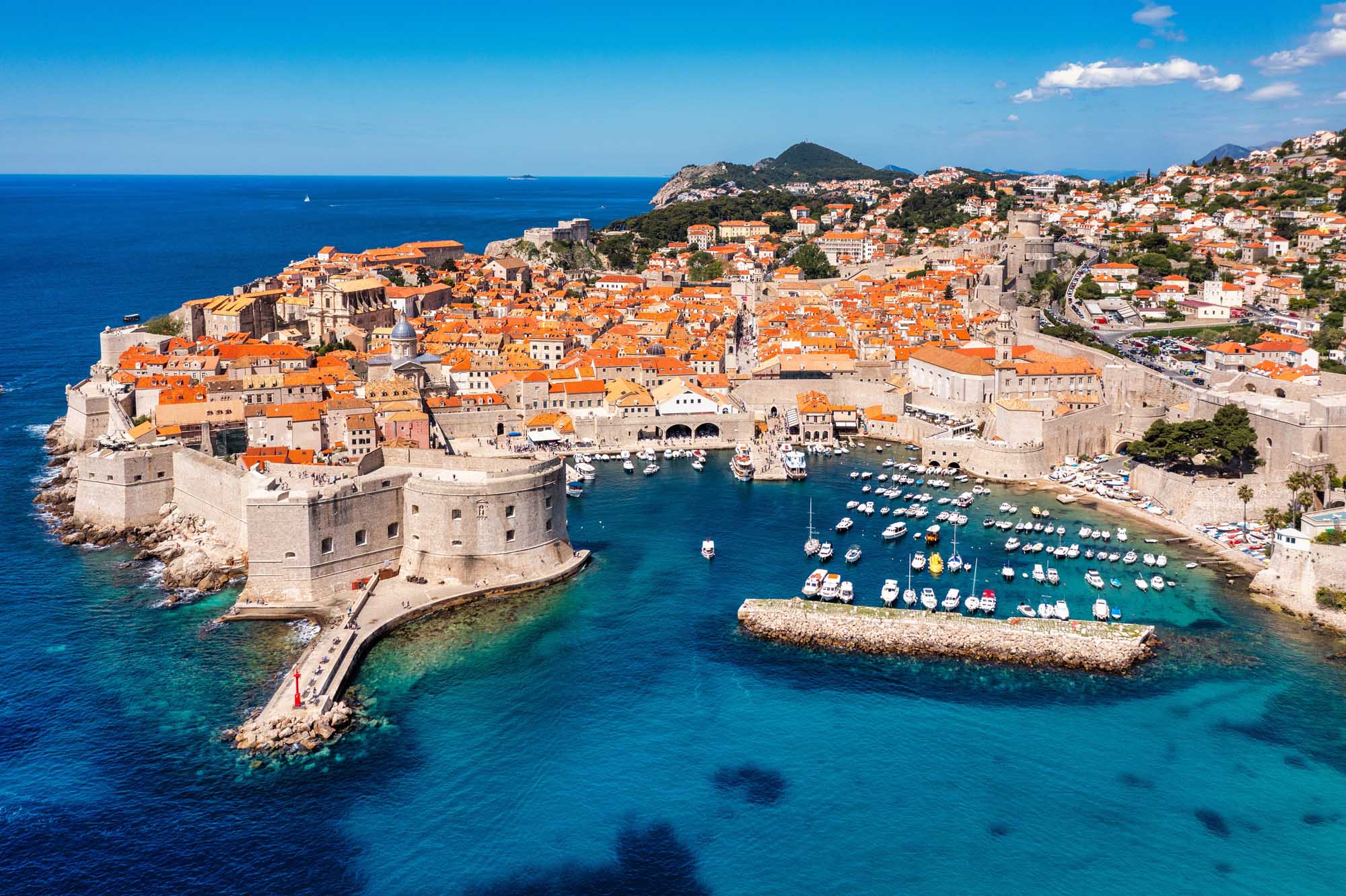
Dubrovnik’s Old Town sits behind nearly a mile and a quarter of intact medieval walls, walkable in full for sweeping views over the Adriatic’s red rooftops and turquoise water. The compact, largely car-free historic center makes this one of the easiest Mediterranean ports to explore entirely on foot.

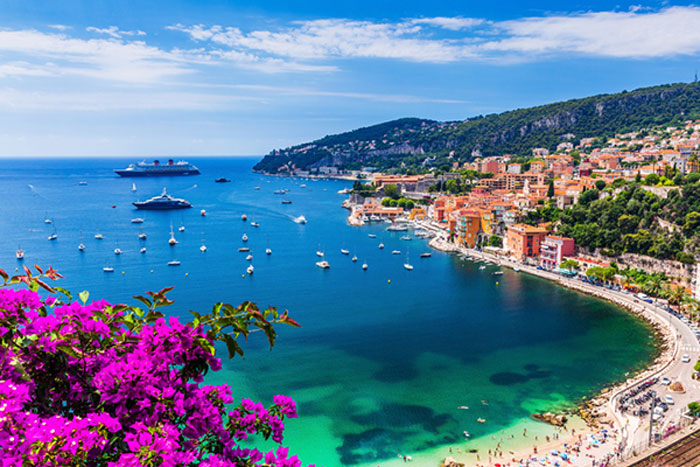
Magenta bougainvillea flowers overlook Mediterranean bay with colorful coastal town and sailboats

Unforgettable Mediterranean Shore Excursions

The Mediterranean’s shore options run as deep as its history. Tour ancient Rome and the Vatican, climb to the Acropolis in Athens, explore the Alhambra in Granada, taste wine in Provence, island-hop through the Cyclades, and walk Dubrovnik’s medieval walls. Culinary tours, wildlife outings, and cultural deep-dives are all on the table, and your cruise travel advisor will match the right excursions to your interests at each port. Hands-on excursion booking management is part of our White Glove Service for travelers who want every stop arranged in advance.

Beyond the Mediterranean

Many Mediterranean itineraries combine with neighboring regions for a longer voyage, and stitching those segments together well is exactly where our advisors add the most value. The Mediterranean touches three continents and dozens of countries, from Spain and Portugal in the west to Morocco and Tunisia in the south to Turkey and Israel in the east, so choosing the right combination can get complicated fast. Our complimentary concierge service handles every detail of that planning, from entry requirements to port-day logistics.

  • Trans-Atlantic – Repositioning cruises connecting Europe and the Americas across the open ocean
  • Holy Land – Visit Israel and Jordan on extended Eastern Mediterranean itineraries
  • Atlantic Islands – Add the Canary Islands or Madeira for a longer, more varied voyage
  • Black Sea – Extended Eastern sailings reaching Romania, Bulgaria, and the Black Sea coast
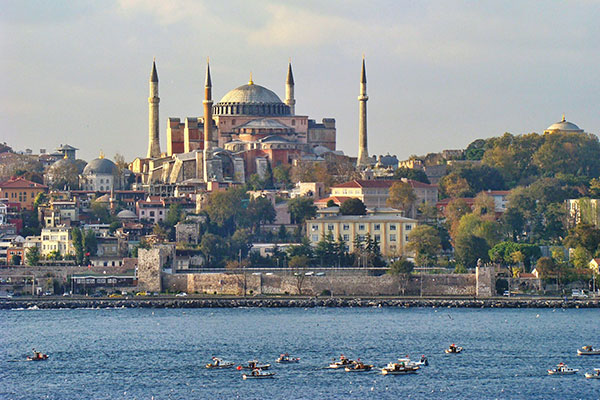
Istanbul skyline with Hagia Sophia and mosques overlooking Golden Horn waterway with fishing boats

Find your specialty cruise today!

We’ll help find the perfect specialty cruise—whether you’re crossing oceans, transiting canals, or exploring the ends of the Earth.

Young couple with backpacks pointing upward while smiling together

Our specialty cruise advisors will ensure your voyage is everything you dreamed.

Rarely will any of us make it to these extraordinary places more than once. So, if you’re going to do it at all, you should do it right. Let the experts at Extraordinary Adventures ensure that your voyage to these remote destinations is everything you dreamed it would be.

They don’t call us Extraordinary Adventures for nothing, you know.

Best Time to Cruise the Mediterranean

The Mediterranean runs one of the longest cruise seasons anywhere, April through November, and each stretch rewards a different kind of traveler. Peak season, June through August, brings long sunny days with temperatures around 77-95°F (25-35°C), ideal for swimming and outdoor sightseeing, and the busiest crowds at every major port, so book well ahead. Shoulder season, April-May and September-October, holds pleasant temperatures around 64-77°F (18-25°C) with noticeably thinner crowds at the headline sites and often better fares than peak summer. Winter sailings are limited, since many smaller ports scale back outside the main season.

Whitewashed church with blue domes overlooking Aegean Sea cliffs in Santorini, Greece

Why Book with Extraordinary Adventures

Expert Advisors

Specialty cruise specialists who understand the unique requirements of expedition and world voyages.

Exclusive Perks

Access to special deals, onboard credits, and amenities not available when booking direct.

Personalized Planning

Custom recommendations for ships, itineraries, and cabin selection on complex voyages.

Full Support

Assistance from booking through disembarkation and beyond—we’re with you every step.

Mediterranean Cruise FAQs

It depends on how you want to travel. Celebrity and Princess deliver a refined premium experience with strong port programs, Royal Caribbean and MSC bring scale and value to family sailings, and Oceania, Silversea, and Regent Seven Seas focus on destination immersion and intimate ship sizes. We’ll talk through your priorities and point you to the line that fits.
Western Mediterranean sailings center on Barcelona, Rome, Naples, Marseille, and Monaco, blending art cities, beaches, and Roman ruins – a natural fit for first-time cruisers. Eastern itineraries lean into the Greek Islands, ancient ruins, and Byzantine heritage, calling at Athens, Santorini, Mykonos, and Dubrovnik. Your cruise travel advisor will help you choose the version that matches what you most want to see.
The season runs April through November, with peak demand from June to August and temperatures around 77-95°F (25-35°C). For the best balance of warm weather and thinner crowds, target shoulder season, April-May or September-October, when temperatures hold around 64-77°F (18-25°C) and major attractions are noticeably quieter.
Most major lines offer Mediterranean itineraries. Contemporary and premium options include Royal Caribbean, NCL, MSC, Princess, and Celebrity, while luxury and immersion-focused travelers gravitate toward Regent Seven Seas, Silversea, and Oceania. We’ll match you with the right line for your interests and pace – reach out to get started.
Barcelona is a frequent recommendation, pairing Gaudi’s architecture with beaches and outstanding food. Rome (Civitavecchia) and Athens (Piraeus) also make excellent starting points, putting world-famous ancient sites within easy reach of the ship. Each works well as an embarkation or disembarkation port for first-timers.
Itineraries typically run 7 to 14 nights. A 7-night sailing samples several marquee ports, while 10 to 14 nights allows deeper exploration and often combines Western and Eastern Mediterranean regions in a single voyage. The right length depends on how much ground you want to cover and how much time you have.
US citizens generally do not need a visa for tourist visits to most Schengen Area countries. The EU’s ETIAS (European Travel Information and Authorization System) is expected to require US travelers to obtain pre-travel authorization, so check the latest entry requirements before you sail. Rules vary by port, especially for Turkey and other non-EU stops, and your cruise travel advisor can clarify exactly what each itinerary requires.
Most Western Mediterranean countries use the euro, and Croatia joined the eurozone in 2023, so it now uses the euro as well. Turkey uses the Turkish lira. Credit cards are widely accepted in tourist areas, though carrying some local cash is smart for small shops, markets, and gratuities ashore.
The roster runs deep. Highlights range from the Vatican and the Acropolis to the Alhambra, Provencal vineyards, the Cyclades, and Dubrovnik’s walls. If you would rather have every excursion arranged before departure, our White Glove Service can manage the bookings for you.
It can be a strong fit. Ancient ruins, castles, beaches, and water sports give kids plenty to explore, and many contemporary lines run family-friendly shore excursions built to engage younger travelers while teaching them European history along the way. Choose a line with a solid youth program, and we’ll help match the right itinerary to your family’s pace.
Lightweight, breathable layers carry you through most of the season, with a light jacket or wrap for cooler evenings on deck. Pack comfortable walking shoes for cobblestone streets and ancient ruins, plus modest attire that covers shoulders and knees for cathedral and mosque visits. Sunscreen, a hat, and a reusable water bottle round out the essentials for long days ashore.

Affiliated with Travel Planners International, a Member of Signature Travel Network. Florida Seller of Travel #ST41877 | myextraordinaryadventures.com | @cruiseandtravel